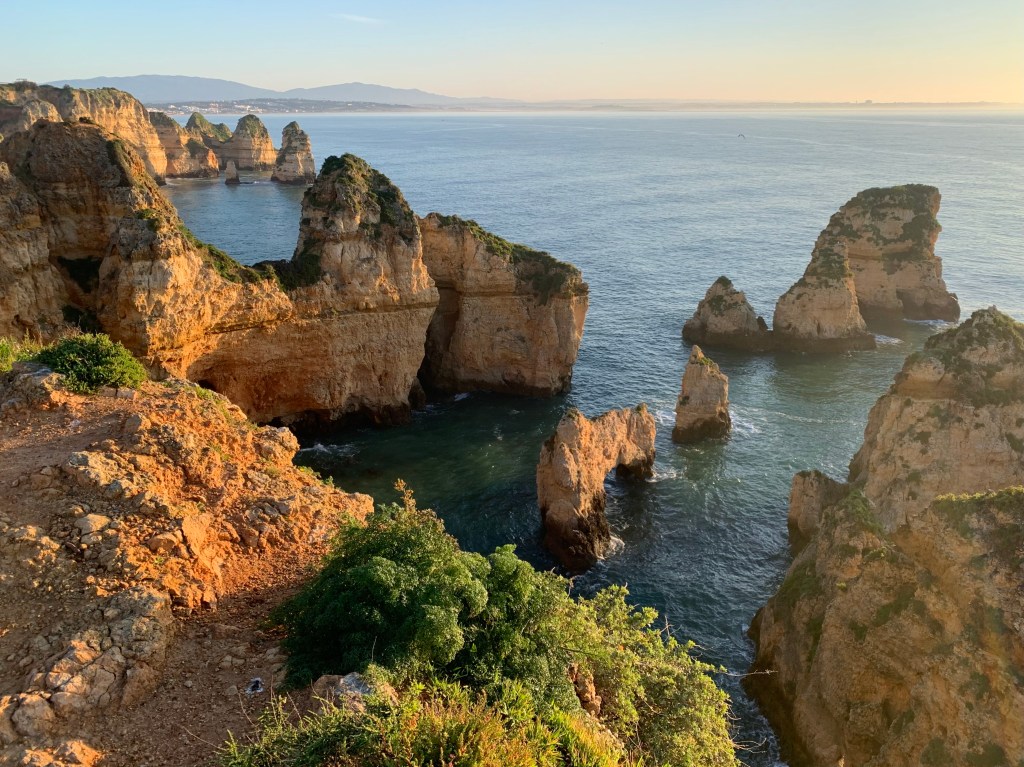
Dark, cold, silent but the sound of the waves crashing onto the rocks, and not a soul in sight, around 5 AM in Mid-March, I was about a few hundred steps down the broken ocean cliff at Ponta da Piedade.
We had been in Algarve for a couple of days and there was not a morning this clear and calm. Today was the last day of our Algarve stay. A sun rise from the horizon would be a perfect farewell to Algarve.
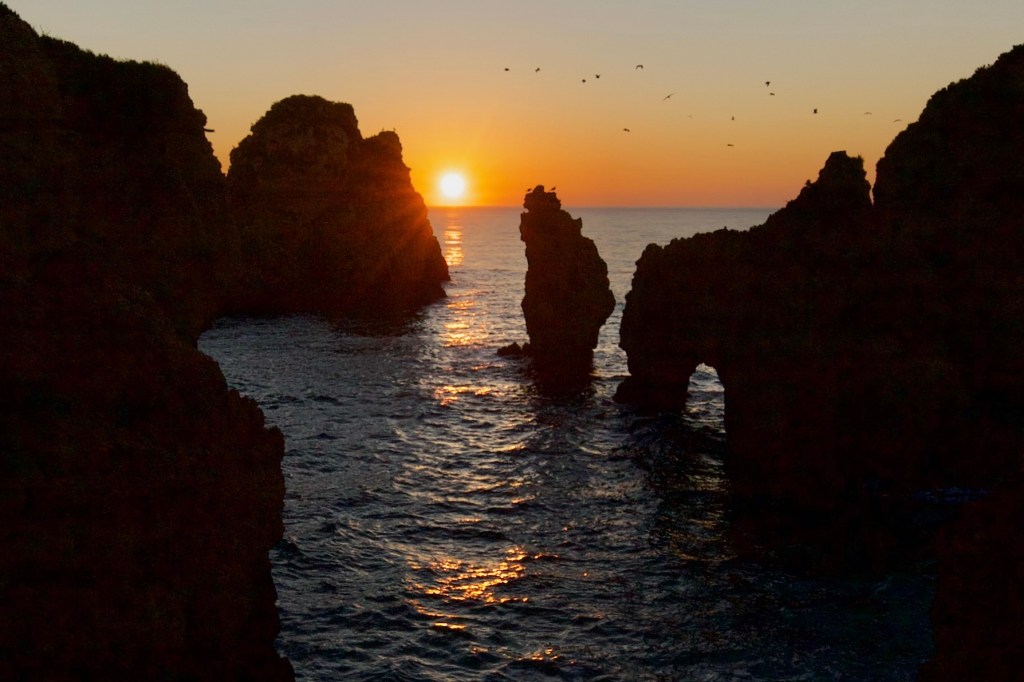
I was standing 2 feet above the sea level trying to avoid splashes on a concrete platform made for swimmers to access the ocean. The sky in the east was getting lighter from navy to grey to pink. Suddenly a ray cracked out from the sea level. It was so bright that I cannot look at it. Fortunately I had my camera to catch the moment and make it permanent. Rising early from my bed that day paid off.
So was the entire trip.
Highlights
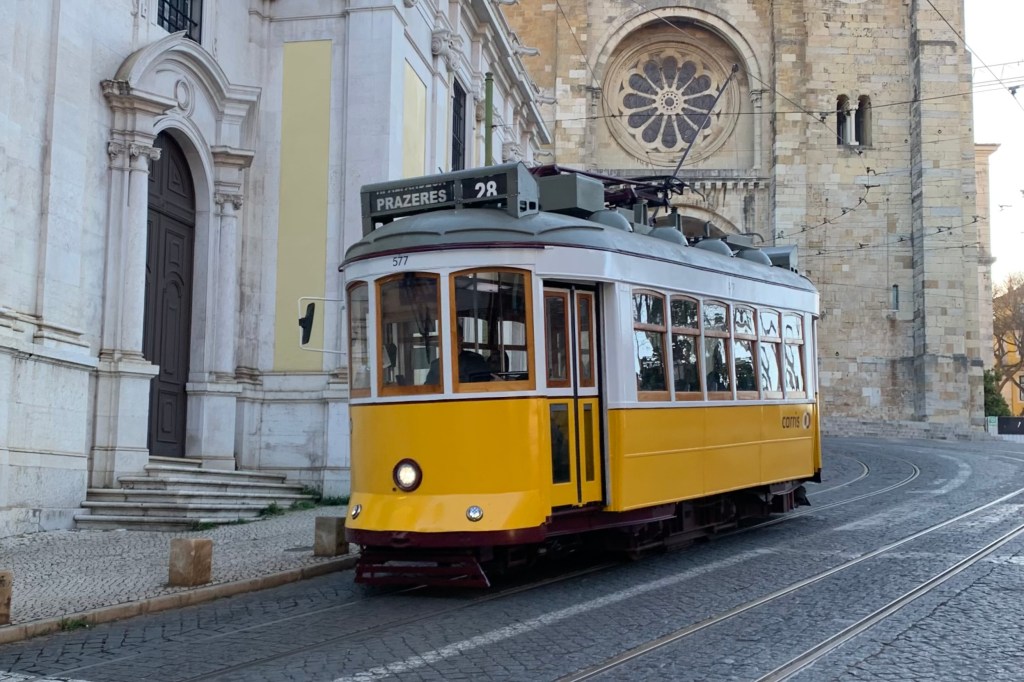
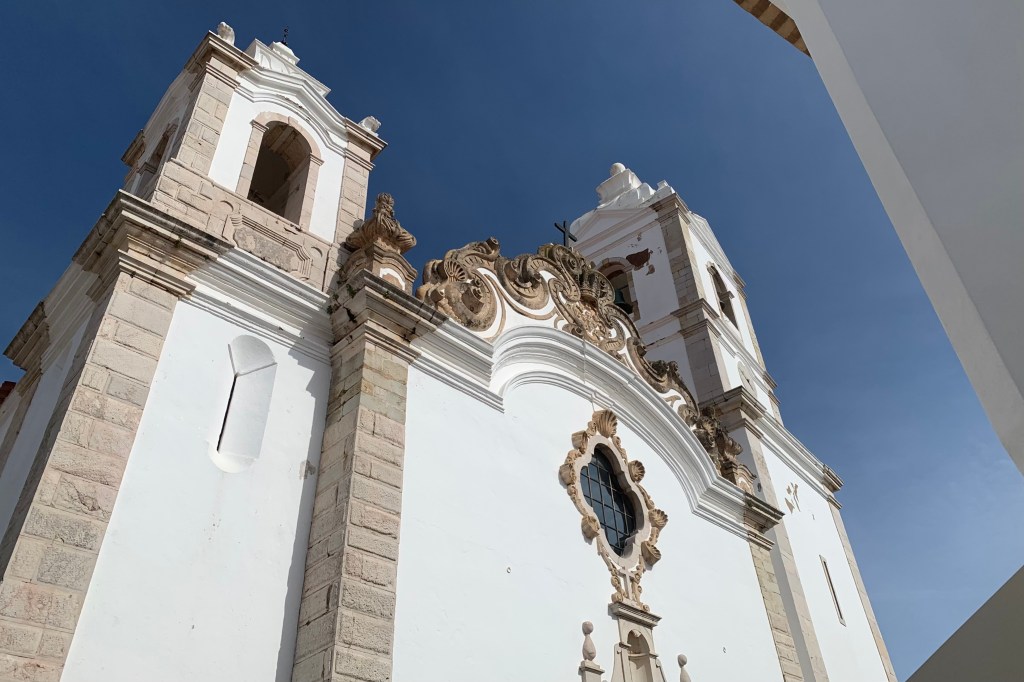
Colorful trollies snaking on hilly streets, black and white stone patterned cobblestone pavement, red roofs on top of pastel-colored buildings, leafy squares with a fountain or statue scattering street corners, a hint of citrus blossom scent in the air – Lisbon is a metropolis where time froze in the 19th century – not unlike many European cities – but is uniquely Portugal. Churches of Portuguese Baroque or Gothic are commonplace. Moorish influence is evident here and there – some walls and church towers are not that different than the city walls seen in Fez, not to mention ubiquitous Portuguese blue ceramic tiles (azulejo), an art originally brought by Arabs. Occasionally fountains lined with ceramic tiles with geometric patterns remind me the ones I saw in Morocco.
If hilly contour and narrow streets are my memory of Lisbon, Craggy cliffs and golden sands is my impression of Algarve. Sights of natural stone arches are not unusual here – they are everywhere – sometimes several of them in one vision field. After a short hiking on the cliffs west of Dona Ana beach, I expected to see at least a natural stone arch or two at every vista point.
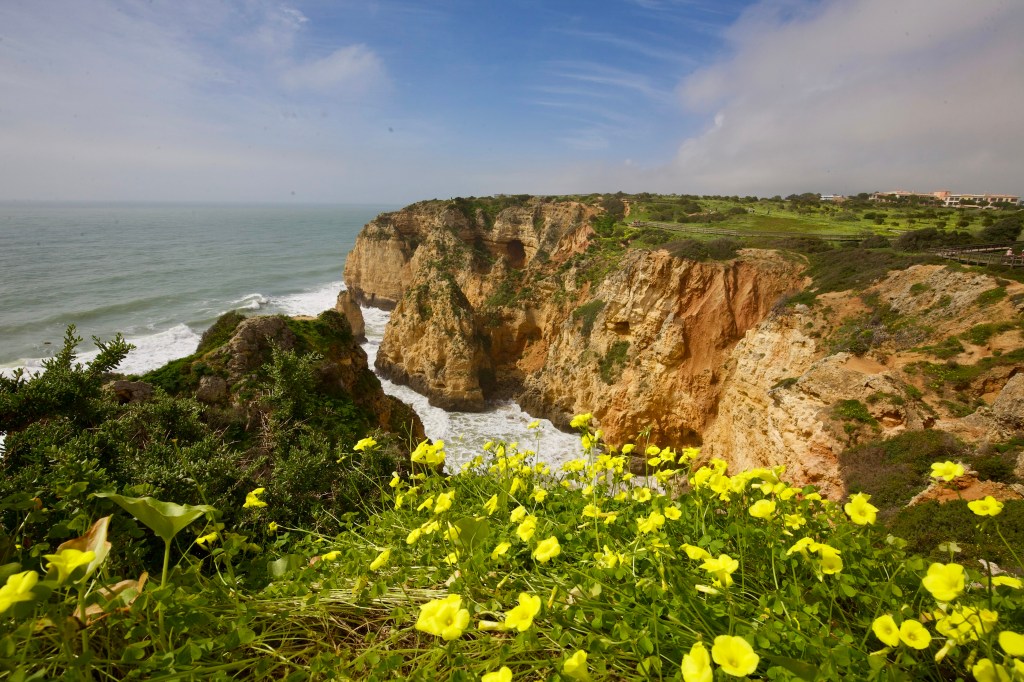
Rocks in Algarve are loose and sandy. The Atlantic Ocean waves here are cruel. Erosion has been carving the rocks and has left permanent marks on the coastline – stone arches, caves, and soft sandy beaches. Algarve has some of the Europe’s finest beaches.- the most beautiful small beaches that I’ve seen – sometimes just narrow strips between vertical cliff faces with only steep steps to access. Once you get to the beach, it’s a paradise for sea gazing and toe dipping in the sea. The water was still too rough and cold to swim in it in March.
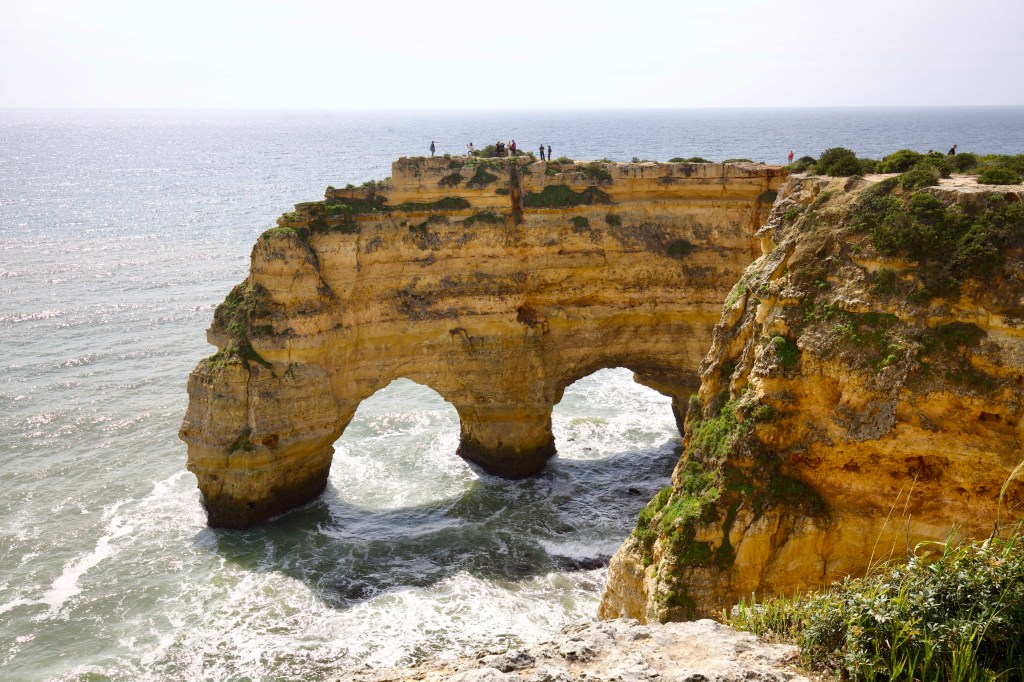
Many beach accesses were closed as the wooden steps are washed away and beach submerged by the natural force of erosion. Places don’t go anywhere and we always can wait till we have more time and save till we have more money to go there. But the quality of the place or the situation of us could change. I don’t want to stand in front of a beach access and find the it’s closed for good, or realize my knees can no longer handle the steps, or the place become too crowded. NOW is always a good time to go.
A Brief History
In the 3rd century BC, present-day Portugal became part of the Roman Empire. Around the 6th century AD Moores from Morocco invaded and eventually occupied the Iberia peninsula which Portugal is part of. Moorish influence is still evident in Portugal architecture and arts such as defense walls and ceramics. Reconquest is the term that describes the war where Catholics gradually pushed the Moores back to Africa from Iberia peninsula, which lasted until 12th century AD. A general from the war raised to power during Reconquest and declared himself Henriques I, King of Portugal. This marks the independence of Portugal.
The sea faring Portuguese advanced navigation technologies that enabled them to sail far – so far that they sailed around Cape of Good Hope, the southern most tip of Africa continent, eventually to South America, India, and Asia Pacific in the 15th and 16th centuries. This golden age of Portugal is also called Age of Discoveries. Powered by its far-reaching marine capabilities, Portugal started the colonial era and built a formidable global empire, which included many African countries, Brazil – the crown jewel of the Portuguese Empire, East Timor, and Macau – the last colony until 1999. A country in such a small package established an outsized global presence that lasted about six centuries – “a little engine that could”.
After a short annexation by Spain, Portuguese regained its independence. Monarchy and dictator rules followed, Portugal became a modern republic in 1974. The country is now a fast growing tourist and retirement destination due to the good weather, inexpensive living standards, beautiful landscape, and convenient location in the confluence of several continents- Europe, Africa, and Americas. A bright future is awaiting.
Our Itinerary
Day 1. Lisbon City Walk
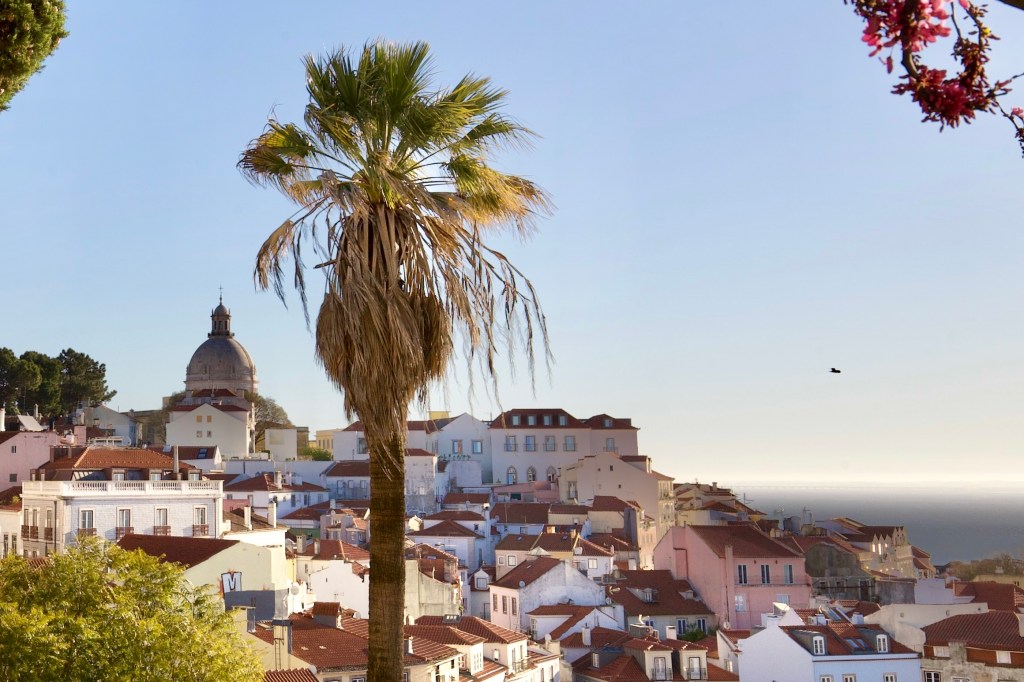
Arriving in Lisbon in the early morning, we took an Uber to downtown and checked in the luggage into a hostel for temporary storage to free our hands before our rental apartment opens. Neighborhood just a few blocks to the east of Conercio Plaza, where we stay, is within walking distance to many major attractions in Lisbon.
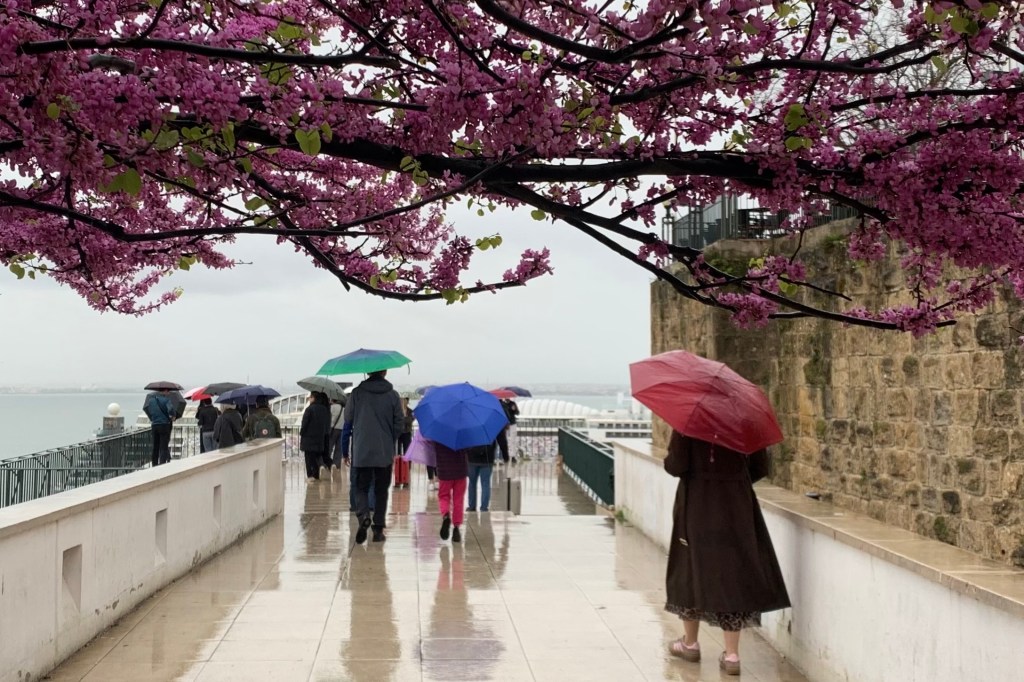
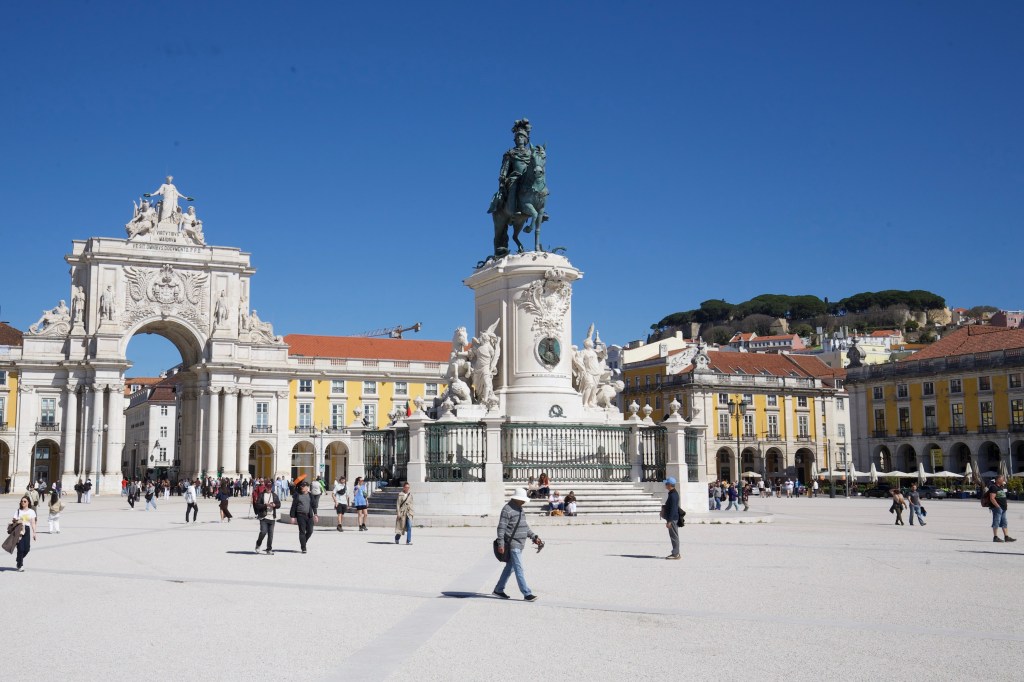
Must do’s: a street walk Miradouro do Santa Luzia, a beautiful vista point to soak in he city; a taste of pastel du nada, Portugal’s national dessert at the plaza across the street from Miradouro das Portas do Sol and a short walk from Santa Luzia; from there a walk up the hill to Castle de Sao Jorge, the highest point of the downtown area with a panoramic view of the city; a walk down hill to Comercio Plaza, the main landmark of Lisbon at the water front.
Day 2. Sintra – So Close yet So Far from the City
Walking to the trains station and taking the commuter rail to Sintra was a breeze. Sintra is about half an hour ride from Lisbon, yet a world away in character. The climate is much cooler, scenes much greener, trees much taller, streets much narrower, and buildings much smaller. It felt like a fairyland.
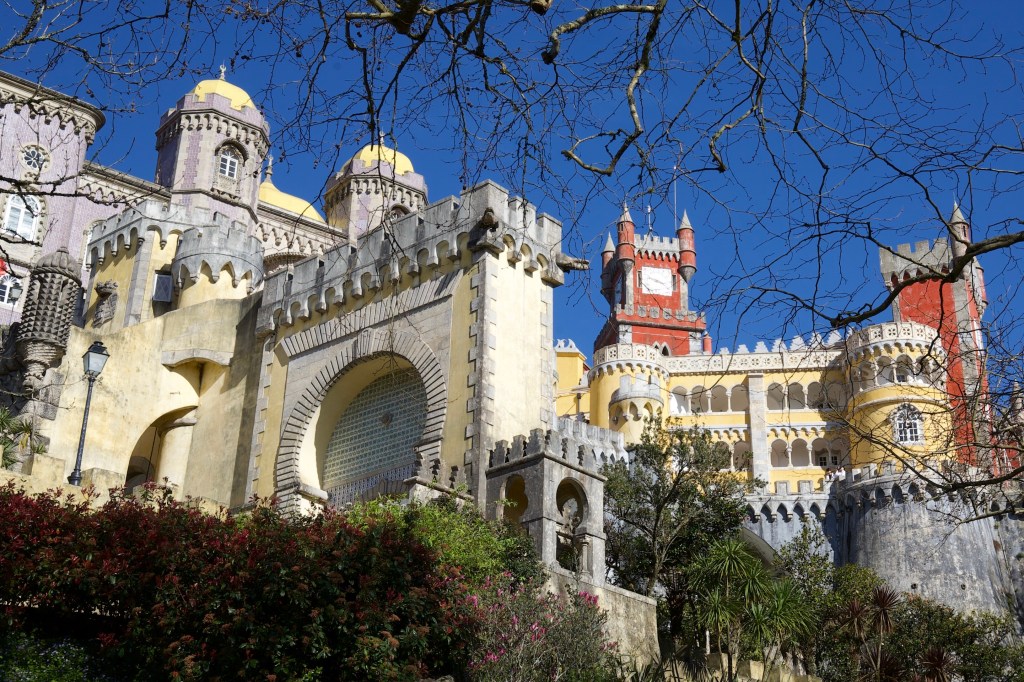
Speaking of fairyland, Pena Palace, situated on the top of the hill overlooking Sintra, the summer palace built by a king in the 19th century, is the embodiment of a wonderland. The architectural style is a collection of Gothic, Moorish, Indian, and Art Nouveau. The color is bold and loud. The location is isolated and high. The plants are lush and subtropical.
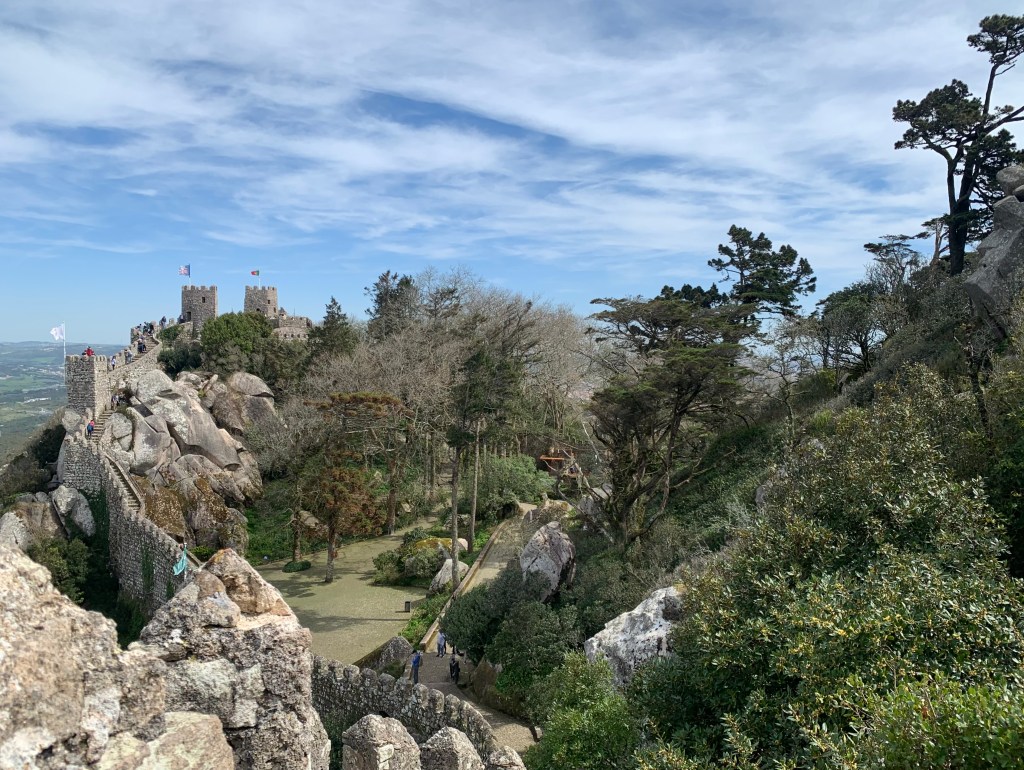
In contrast, a mile or two away from the palace, Moorish Castle is an ancient ruin with a much subdued tone. Just the hike down the hill from Pena Palace to the Moorish Castle through the winding trail under the big trees in tranquility worth the trip to Sintra. Walking on the castle walls and ground is as refreshing as sitting in the mossy cobble stone paved castle courtyard under the shadow of the ancient castle and trees, pondering the clash and fusion of the cultures.
Day3. Belem Tower
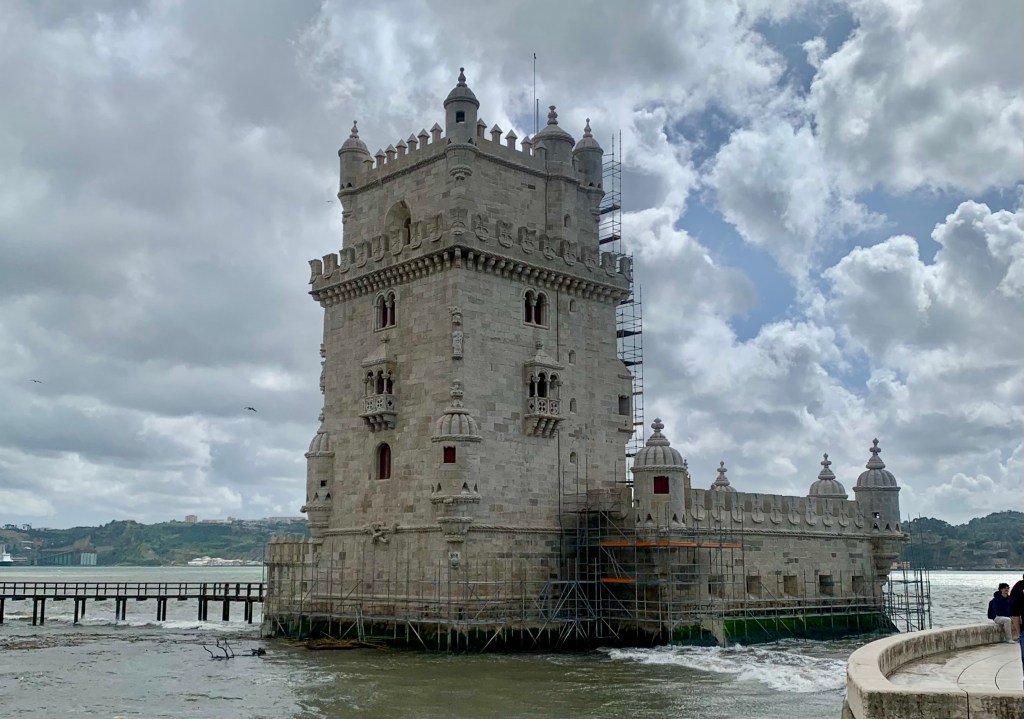
Must do’s: Leisurely walking along the Tagus River bank. Stops at Belem tower, Discovery Monument, and Jeronimos Monastery – a Portuguese Gothic masterpiece. Relaxing breaks in the quiet Botanical Garden (site of last century’s Lisbon World Expo) next to the monastery and the famous pastel de nada place nearby (just look for the long line along the street).
Day 4. Cascais
A half hour ride from Lisbon is Cascais, famous for Boca do Inferno and huge ocean waves. The leisurely walk from Boca along the promenade to the town center, with a stop at the upscale town marina, offered a sampling of the town’s beauty.
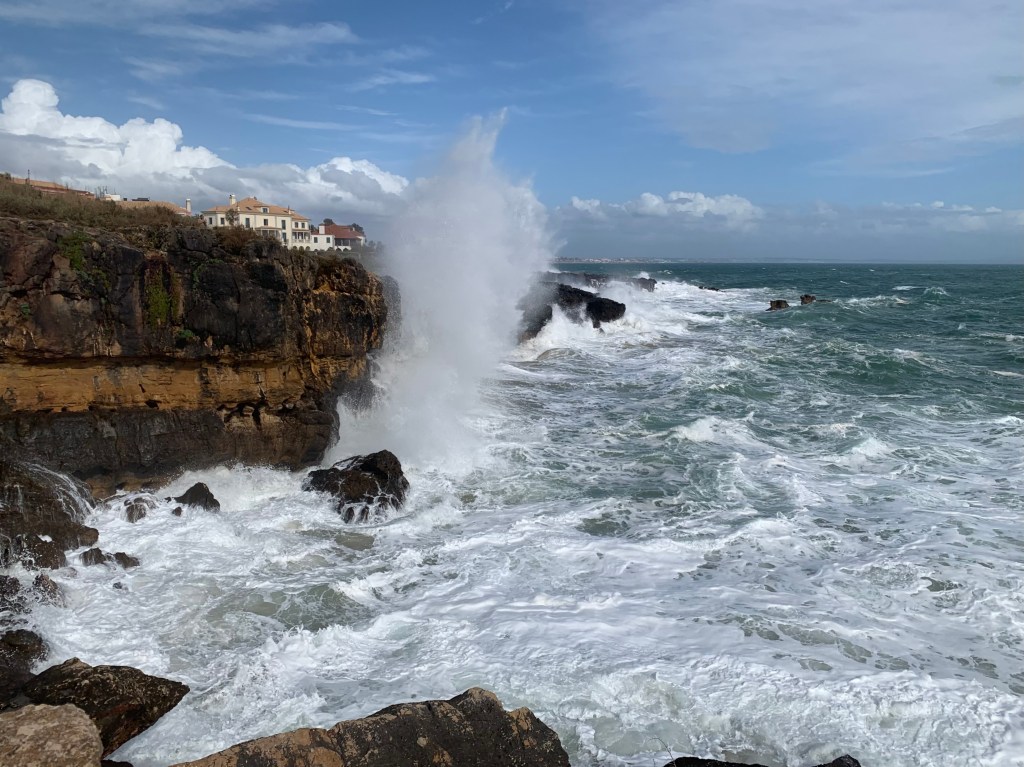
Day 5. Lisbon to Lagos
This was a 3-hour drive with a lunch stop at Kira Kaffe in Alcacer do Sal. The hamburger there is most delicious, with a distinct flavor of the Portuguese grass-fed beef.
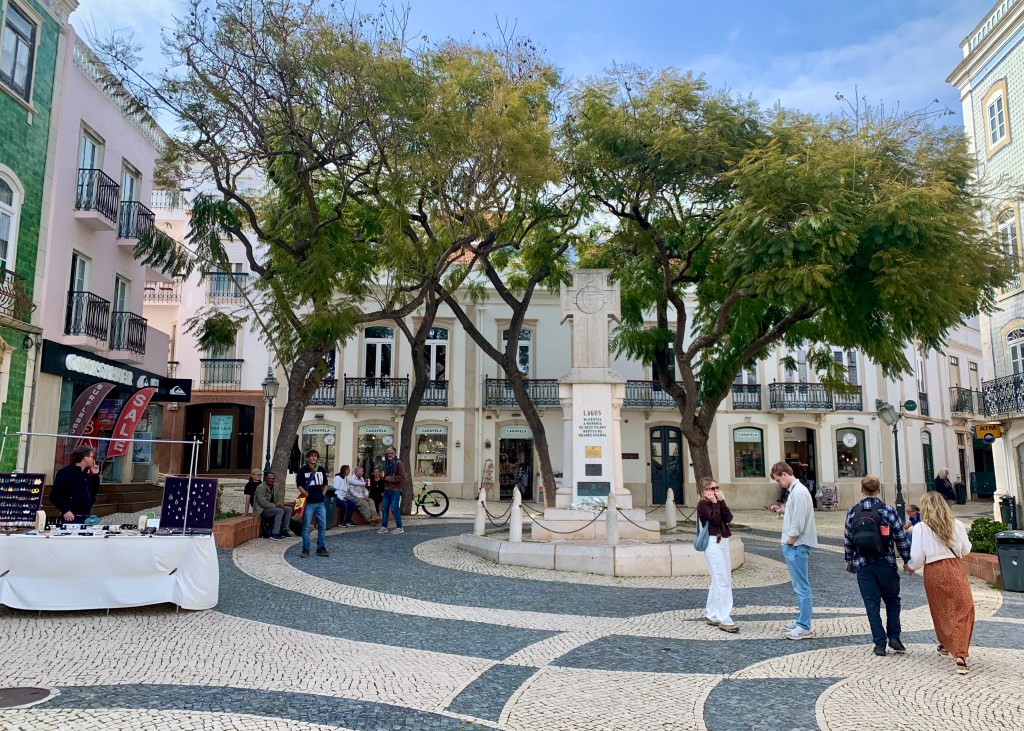
Day 6. Dona Ana Beach to Ponta do Piedade
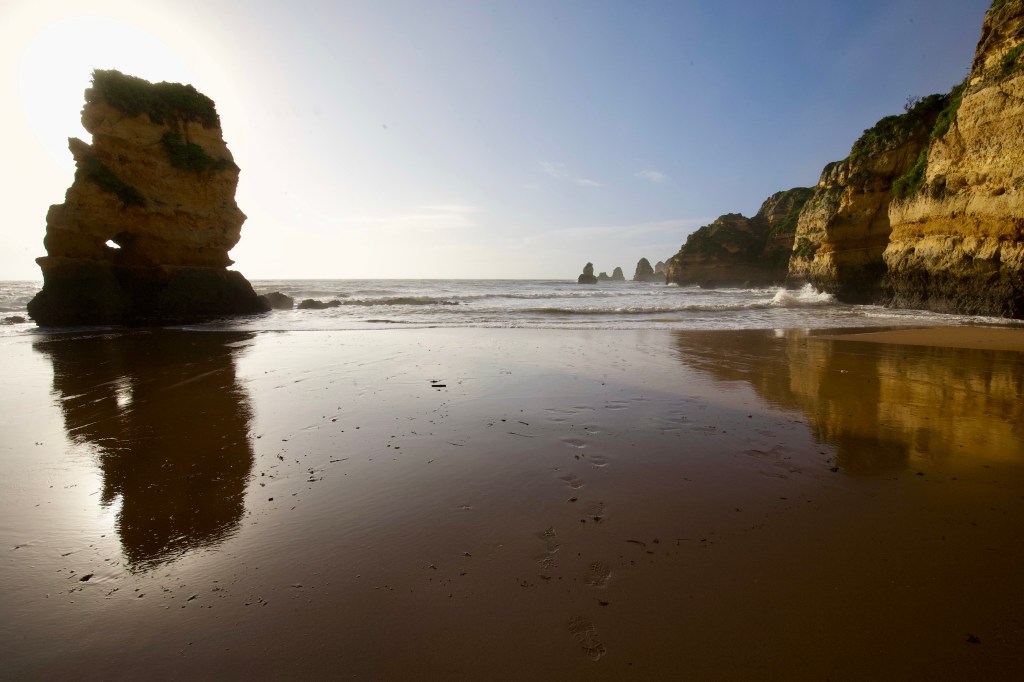
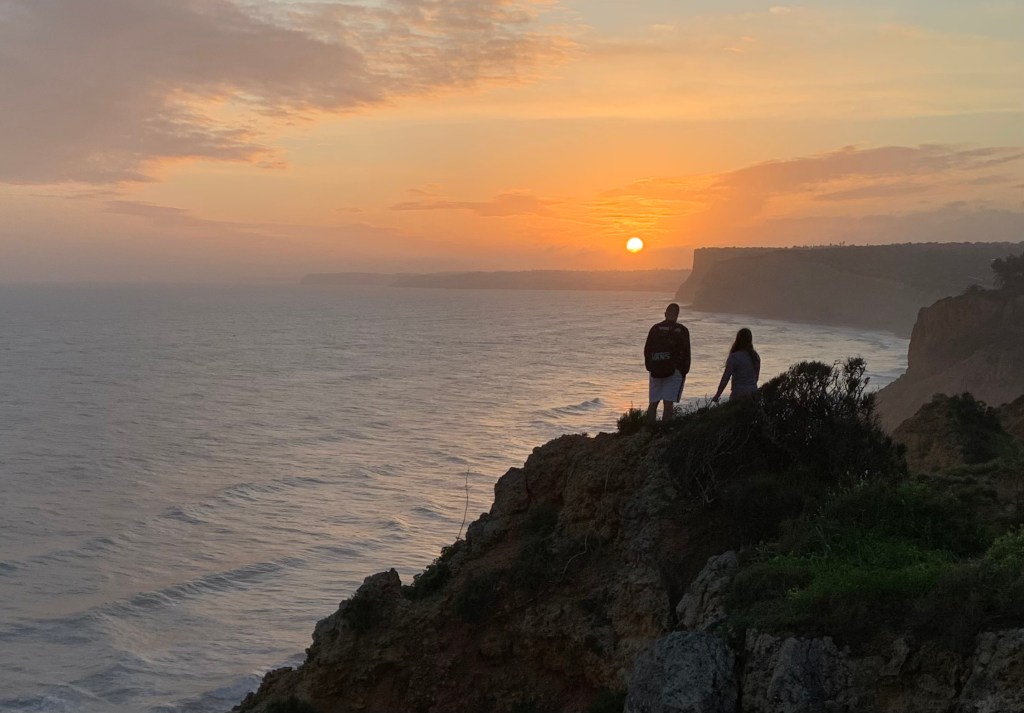
The golden sand and golden cliff face on Dona Ana beach under the early morning sun were etched to my head as my Algarve memory. During our 3-night stay in the area, a stroll on the beach is my morning ritual. A walk along the cliff boardwalk to Ponta do Piedade to watch the sunset was the best post-dinner treat.
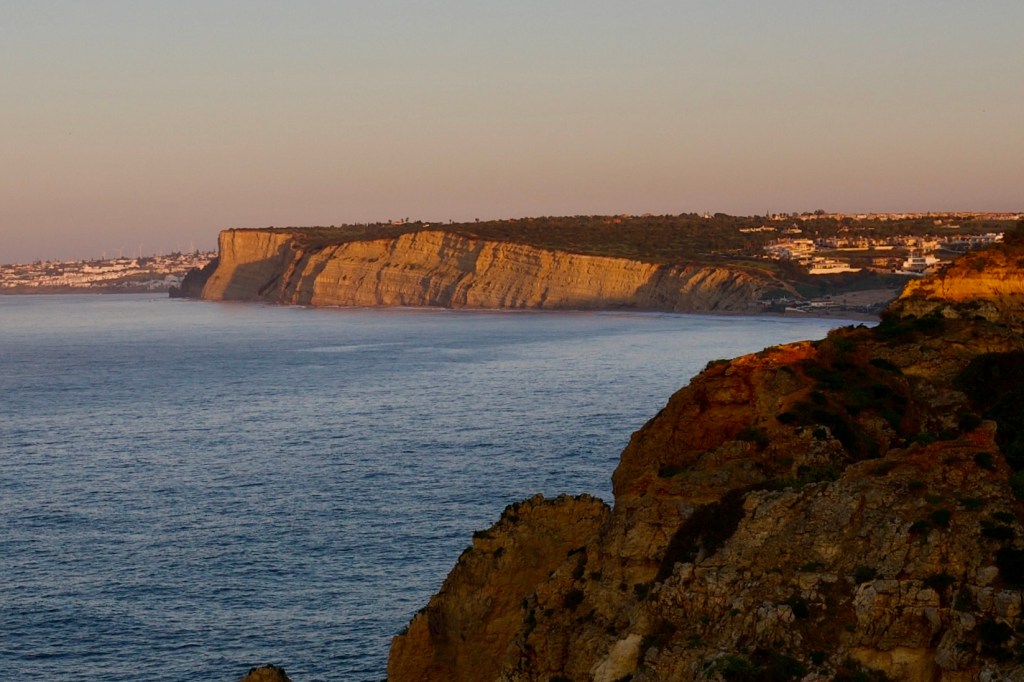
Day 7. Marinha Beach to Cabo Cavoeiro
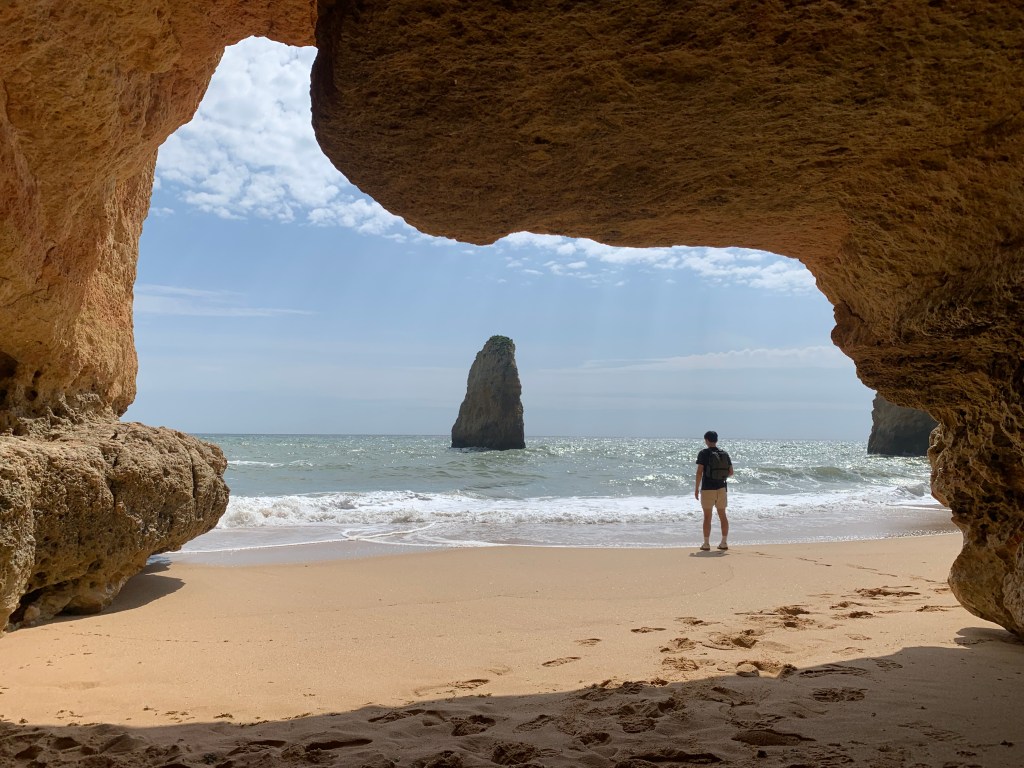
If the cliffs around Dona Ana beach is dramatic, the scale of drama around Marinha beach is grander. The hiking trail between the beach and Cabo Cavoeiro was light and pleasant, with many beaches, stone arches, caves, and sink holes scattered along the way. If you only have one day in Algarve, this is the trail to walk. O Camilo, a seafood restaurant on a cliff boardwalk near Camilo beach is a perfect place to chill down after a day of hard work. We were greeted by a display of seafood assortment on the crushed ice bed. The owner explained the tastes and cooking methods. We picked our choice of seafood and way of cooking. The taste spoke aloud. The freshness was unmatched.
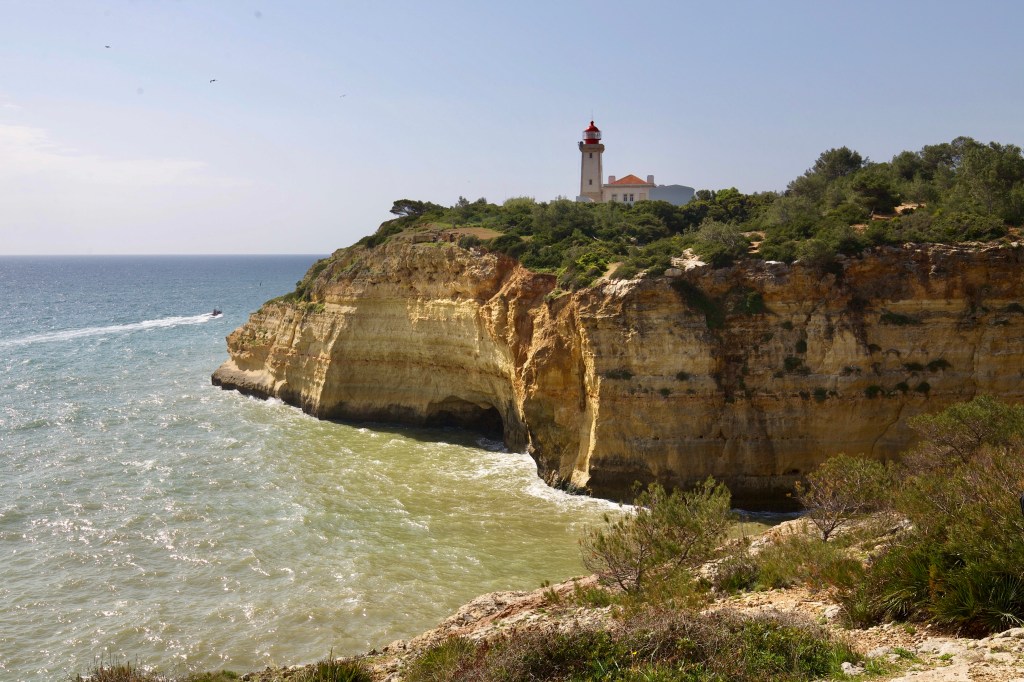
Day 8. Armação de Pêra to Benagil Cave
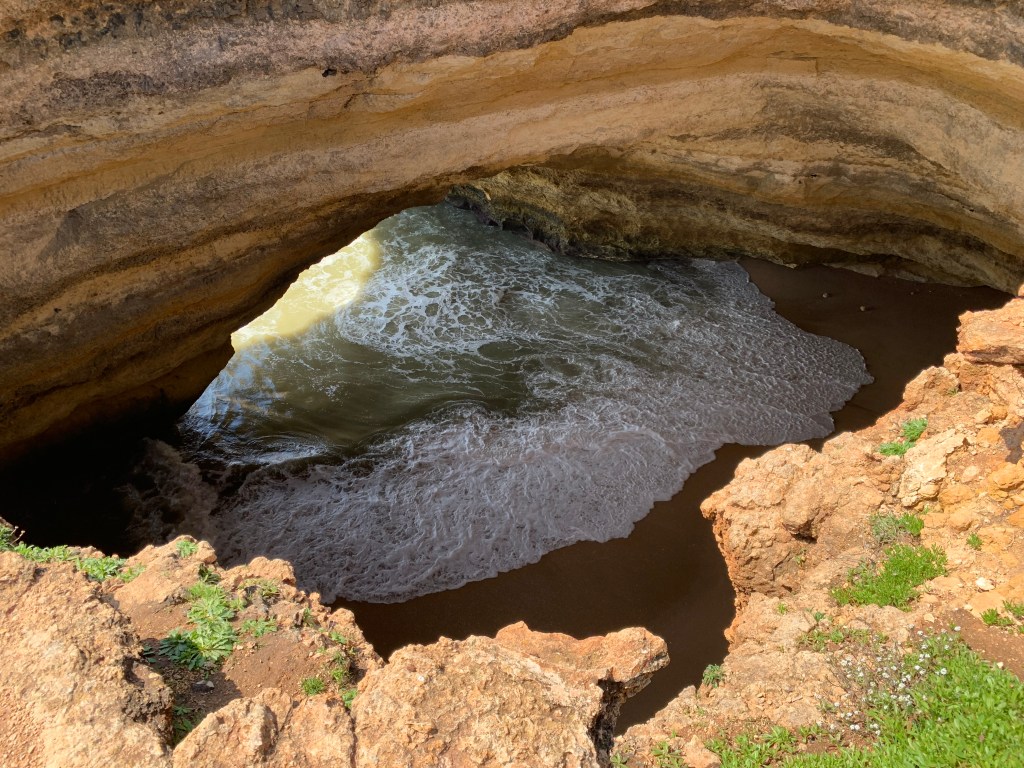
Our trip was capped with a boat tour from Armação de Pêra to Benagil Cave, the most pictured landmark of Algarve. The sea was choppy and our originally booked kayak trip was canceled. We booked a boat tour to the cave, and the views around every corner of the jagged coastline worth the turbulence.. A stop at a piri piri chicken restaurant, Balbino, in town center was a good way to wash down the bumpy boat ride afterwards. It was the most delicious grilled chick in our trip.
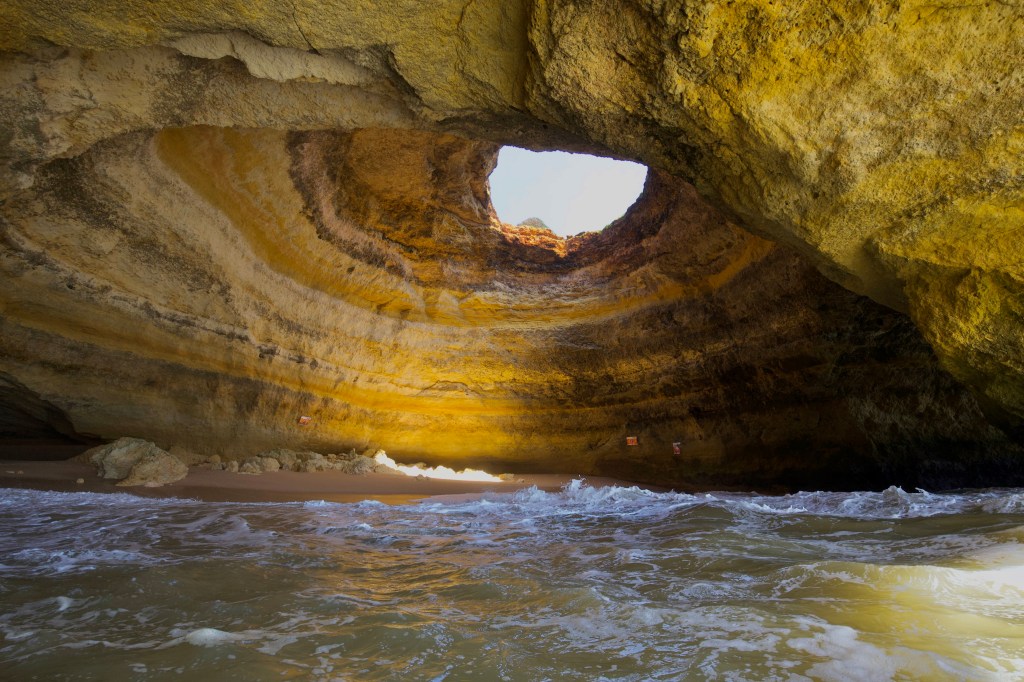
***
Among the coastal areas with dramatic landscape – Lofoten on the Arctic Ocean, Big Sur on the Pacific Ocean, Phuket on the Indian Ocean, rarely have I seen a coastline as broken as Algarve. Few countries do sea food, especially squid and octopus, as tender and tasty as Portuguese do – if I dare to say – and I’ve tasted some delicious dishes around Mediterranean, Scandinavia, and China. The trip in Portugal was a feast to my eyes as well as my tongue.

 A Passer-by 过客
Leave a comment