How close is Africa from Europe? You can see Europe from Africa with naked eyes on a clear day. That is less than 9 miles, at the Strait of Gibraltar between Tangier, Morocco and Tarifa, Spain across the Mediterranean Sea. There are regular services between the two continents that one can take a day trip to the other continent by ferries across the strait.
The Trip
Africa was a continent that had always intrigued me. In early 2021, a friend of ours visited Morocco and highly recommended the tour. We decided to go to Morocco as our first adventure into the Africa continent.
The friend shared a Morocco travel log written by one of his group members as well as the tour company’s contact information. Using those were able to skip a lot of research of our own. The tour operator made the arrangement for us: a 4×4 SUV with a driver and a tour guide who speaks Arabic, Berber, French, English and several other languages. This was a personalized tour to our specifications. We chose the places that we wanted to visit and the type of hotels that we’d like to stay. The package included transportation, guides (a traveling guide and 2 local guides, one in Merrakech and one in Fez), a driver, lodging (11-night, 7-place), a camel tour, and some meals. Our guide and driver would pick us up at the airport and we’d be traveling on a 4X4 with the driver and the guide for the rest of the tours. It felt like we were going on a mini expedition.
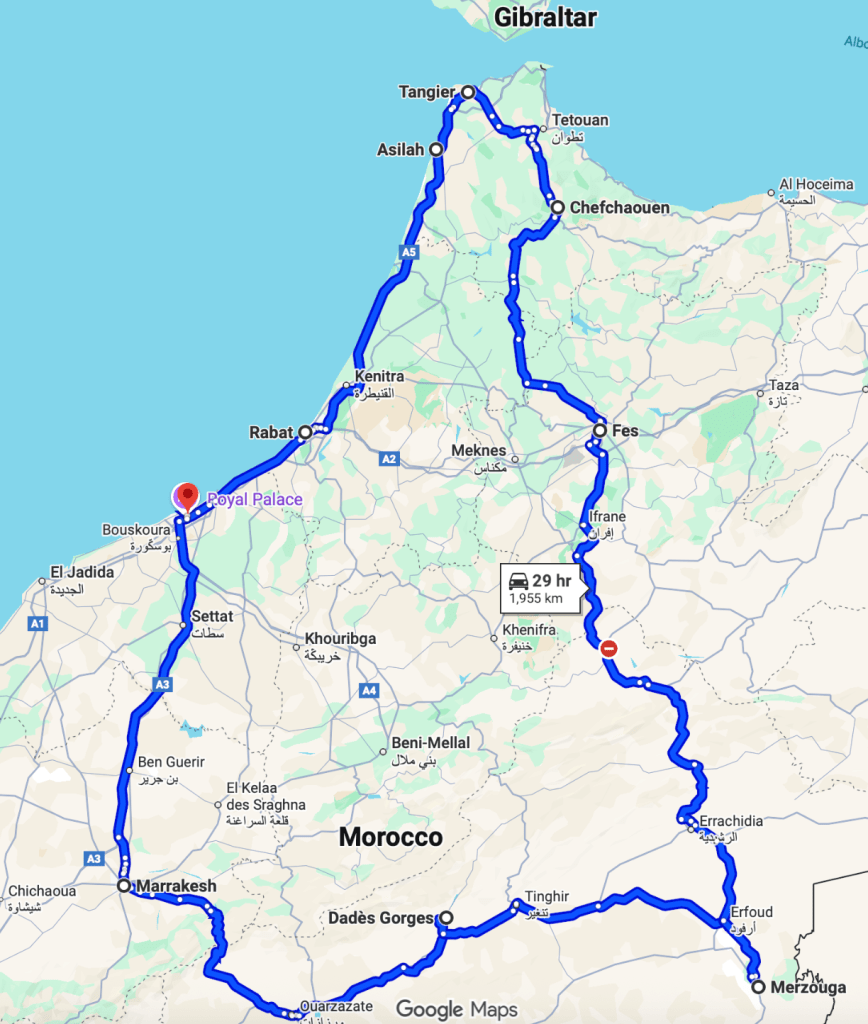
We flew to Morocco in early June 2021, just before it got too hot in the desert, arriving in and departing from the Casablanca International Airport. Our night stays were household destinations: Marrakesh, Dades Gorge, Sahara Desert, Fes, Chefchaouen, Asilah, and Rabat. We also made day trips to Casablanca, Ait ben Haddou castle, Todga Gorge, Meknes, Volupolis, Tangier, and Cape Spartel.
People, History, Culture, and Language
A majority of Moroccans are originally Berbers and some are Arabs. Berbers are native people who live in North Africa and speak Berber language. Morocco became two provinces of the Roman Empire after 40 AD. Some 600 years later, Arabs migrated to Morocco with the Muslim Conquest of North Africa in the 7th century. Since then, North Africa has been part of the Muslim world. The most widely spoken language in Morocco is Arabic and Berber. Most of the road signs on highways are in 3 languages, Arabic, French, and Berber. People in the cities speak multiple languages, usually Arabic, French, and Berber, especially if they conduct business. The country was a protectorate of France and Spain starting from 1912, with France controlling most of the country. Morocco regained its independence in 1956. There are still 2 Spanish enclaves in the county, each the size of a city, on the Mediterranean coast east of Tangier.
Food and Accommodation
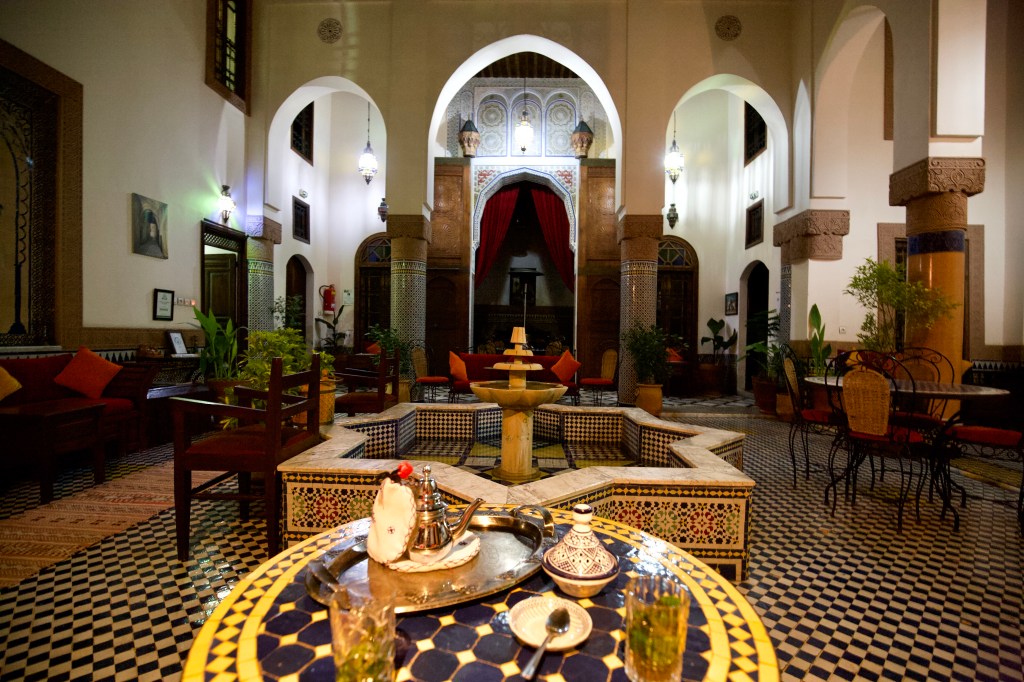
Moroccan-influenced food is quite popular in the U.S., especially couscous. You can eat couscous everyday in the U.S in many restaurants. But in Morocco most restaurants serve couscous only on Fridays because it takes time to make it and they use couscous to celebrate a week’s hard work. Tagine is like a national dish in Morocco. It’s a vegetable or mixed vegetable and meat dish slow cooked in a clay pot. The dish is delicious and the cone shaped, exquisitely painted tagine pot is a eye candy.
Riad–a traditional house with a courtyard–is a must experience in Morocco. We stayed at 6 different riads in 5 different cities and a village. The only night we didn’t stay in a riad we stayed in a tent. We loved riad experience and could’t get enough of it! It’s not that we don’t have a choice in Morocco. There are plenty of modern hotels in Morocco. We wanted to experience what’s unique for the locality. The architecture, decor, and atmosphere of each riad were rich with their own characters. They all made fond memories.
Marrakech
The name Morocco is derived from Marrakech. It is one of the four historic capitals of Morocco. The reddish-the color of the local earth-stucco gave the city the nickname “Red City”. The most famous attraction of the city is the open air market (souk), where you can be sure to get lost in the maze of allies of vending kiosks. The allies are narrow and the vendors can hustle, which may not suit everybody’s comfort zone. The busiest time for the souk is after dinner. It seems everybody in the city is out in the Jemaa el-Fnaa square strolling and people watching.
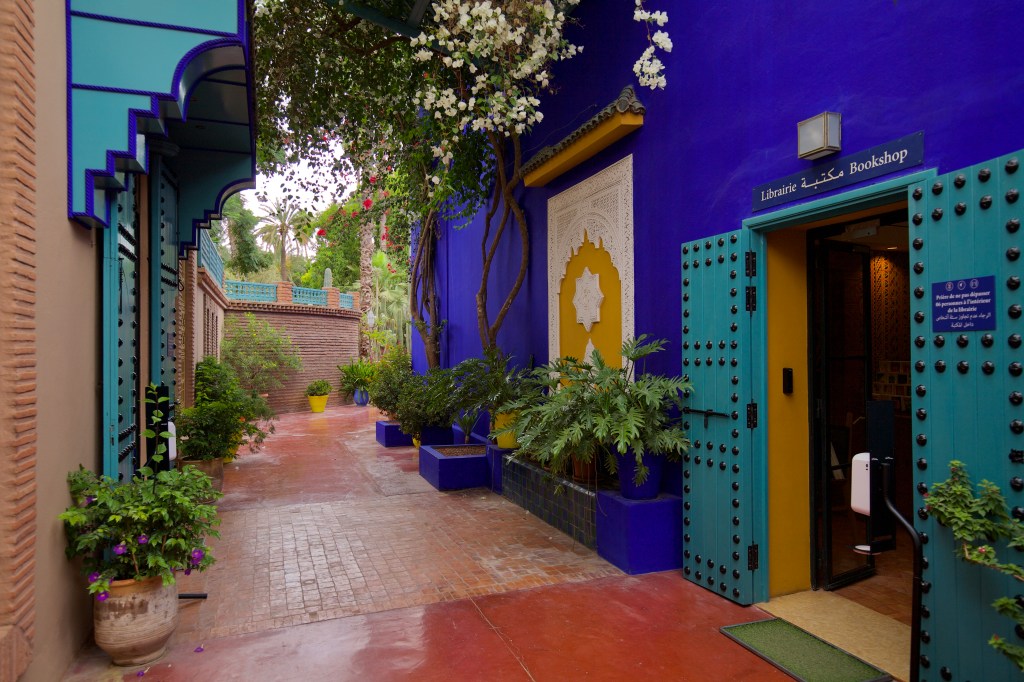
The city is also famous for Jardin Majorelle and Bahia Palace. Jardin Majorelle is a garden owned by French fashion designer Yves Saint Loren. The color of the garden is so vibrant that it leaves a lasting impression in my head, particularly cobalt blue and terracotta red. Of course there are many other colors carefully choreographed in the garden. He used his fashion palette for this garden.
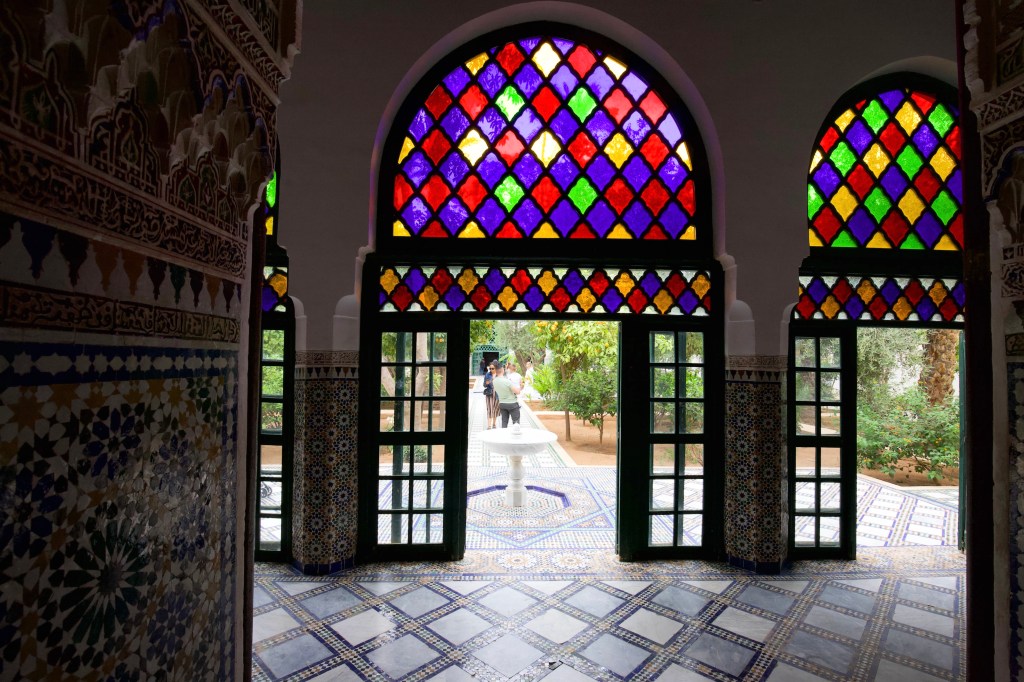
Bahia Palace is an example of Muslim architecture: courtyards, gardens, geometric layout, fountains, pointed arches, patterned ceramic walls and floor decorations. The small palace is very intimate compared to many big palaces. The size of the palace is like a buddhist temple. My favorite part is the garden with a fountain at the center and 4 partitions of smaller gardens at each quadrangle of the big garden. The fountain is uniquely Islamic, with a symmetrical 16-sided footprint, decorated with geometrical ceramic pieces.
Dades Gorge
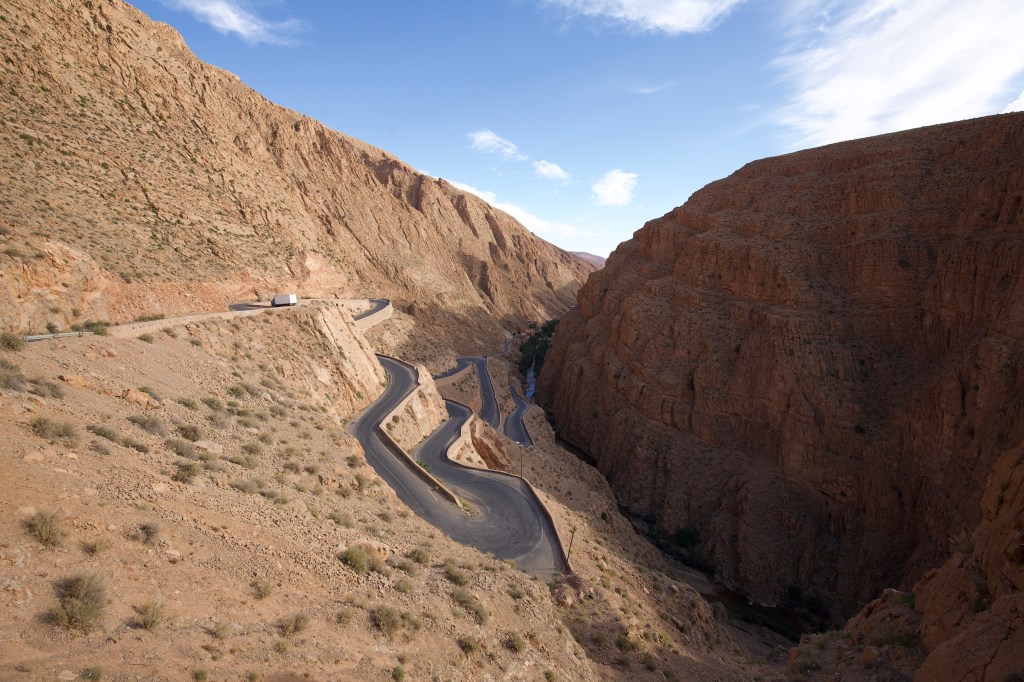
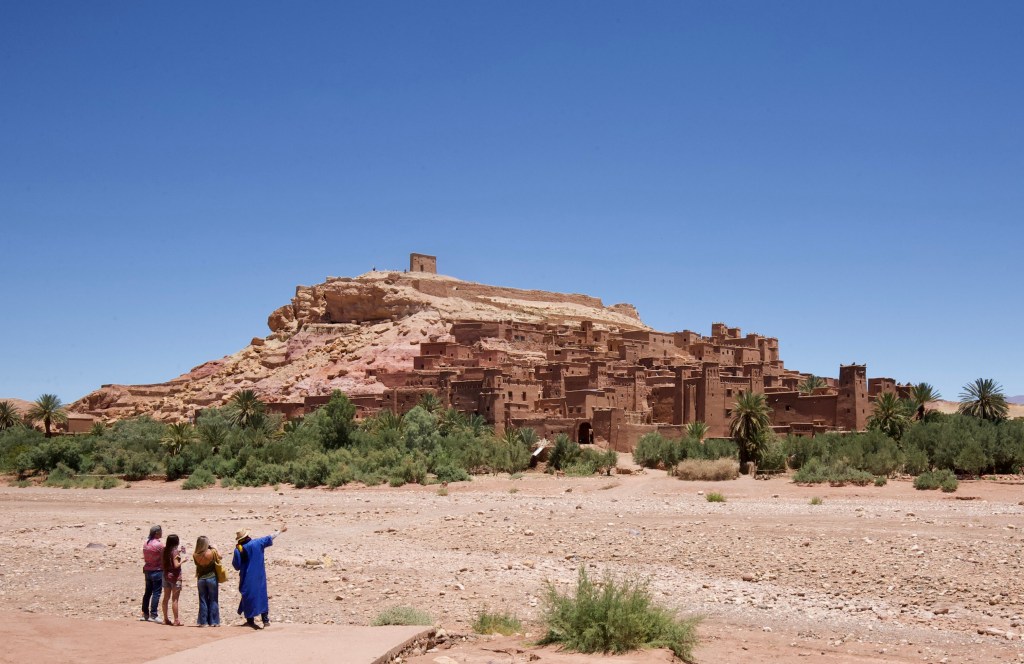
Dedes Gorge is on the way from Marrakech to the Sahara Desert. We made a stop at Aiit Ben Hadu, an ancient castle of red adobe complex built around a hill on a river bank. We got to Dades Gorge in the late afternoon. The gorge is like a miniature Grand Canyon with slanted red rock formations. The small village where we stayed for the night was flanked by crop fields on a flood plain. In the middle of the flood plain is a small creek lined by flowery shrubs. In the morning, I ventured to the fields and saw mostly ladies gathering branches and hays along the creek, saying “salam” to me when passing by. A leisurely farming scene.
Sahara Desert
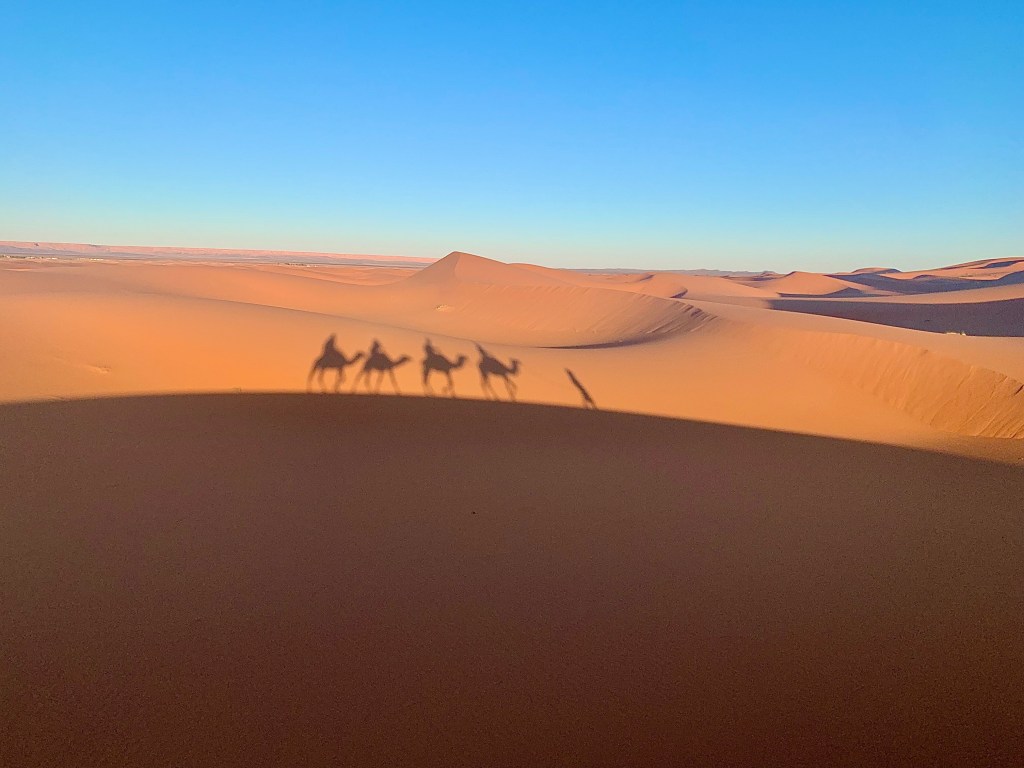
The highlight of this trip has to be the Sahara Desert. Camel ride, dune climbing, feast, camp fire, star gazing, and tent camping in the desert, we got the whole package. Our “international” nomadic tribe consisted of 4 camels, their riders and the guide. Following the guide were 3 of us and a female tech executive from Silicon Valley who was traveling solo. The guide is a young local lad in colorful traditional robe and turban. The ride started from a foot hill of the endless sand dunes. We mounted the camels resting on the ground. After making sure we were holding tightly the handle, the guide signal the camels to rise one by one. Suddenly I felt like I got a balcony seat from the back of the camel. The arrival was timed so that when our “tribe” climbed the sand dunes, the desert got more and more red under the setting sun. As we get deeper and deeper into the desert, all we could see was our long shadows on the golden red sand. There was nothing in my view but blue sky, red sand, and pure tranquility.
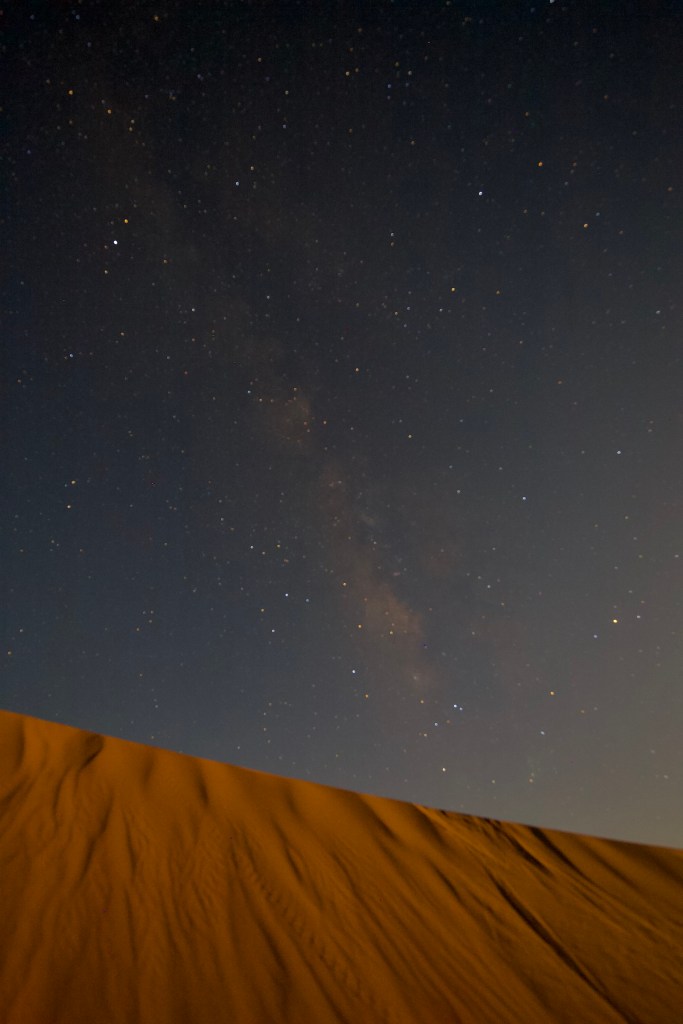
My mind was enveloped by sand. On a macro scale, I’m no different from a grain of sand. Sands on the dunes are silicon-based; we humans are carbon-based. Carbon-based humans are developing silicon-based AI chips. AI is replacing humans at an accelerating pace. Silicon-based intelligence is taking over carbon-base intelligence. What a circle! But I digress.
We dismounted the camels in the heartland of that patch of the desert after a long ride. The sun was about to set. We took off the shoes and the guide led us to charge up the sand dune which is the size of a hill. The dune was soft and the sand sank and shifted under our feet. Two steps forward, one stop backward, we trudged. The guide had to turn back, unwind his turban, and use it as a rope to tow the 2 ladies up one by one and little by little. We climbed, with hands and feet, to the summit just in time to take a picture before the sun completely set. Phew!
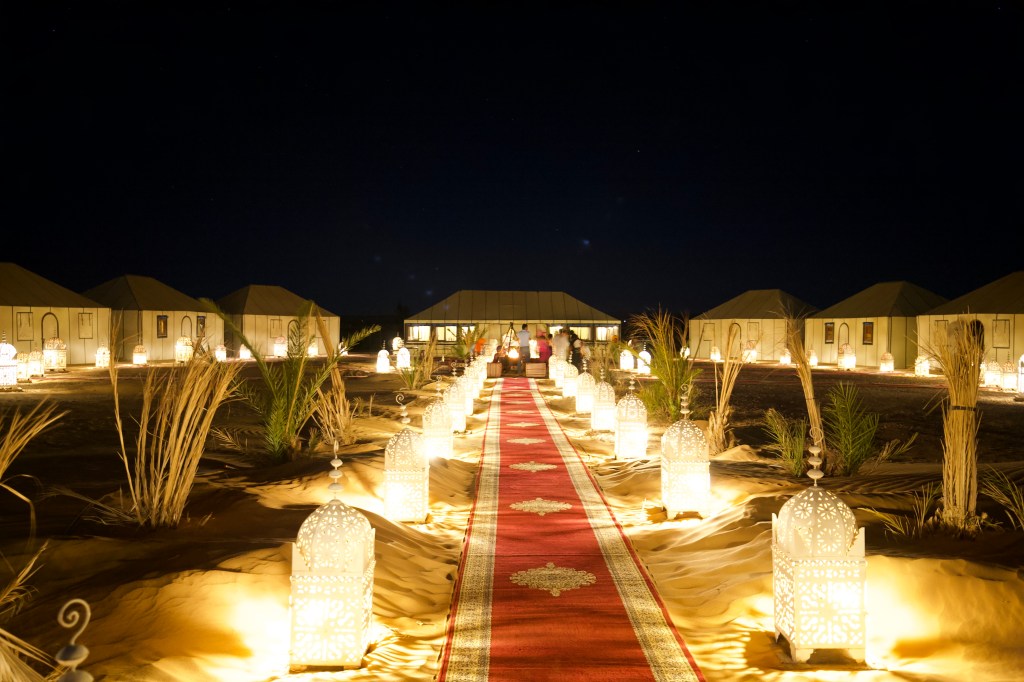
Everything was timed perfectly. We went back to the camp under star light, thanks to the guide and the camels for the navigation. Our camp was a 7-tent complex connected by rugs and illuminated by traditional lamps, with a camp fire at the center of the complex. The tents were actually spacious luxury suits with beds, a bathroom and shower made of canvas anchored on sand. The large middle tent was a feast hall. A sit-down multi-course feast was served under the large tent, followed by live traditional music around the camp fire under the starry sky, and everybody danced around it, cel ebrating this unique place and experience.
Fez
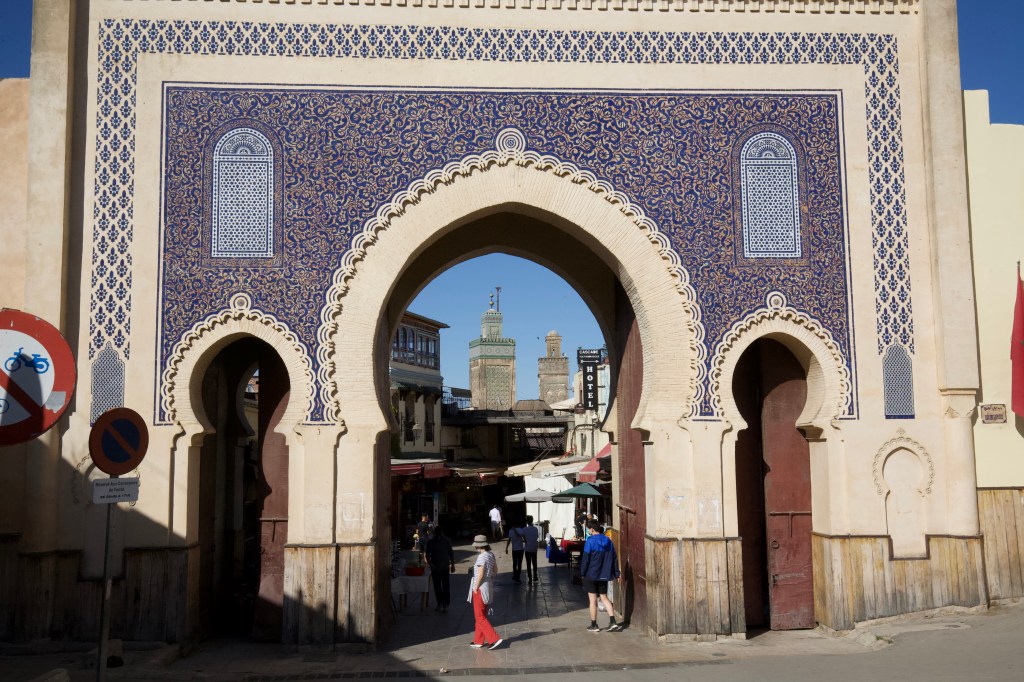
Fez was the biggest of the imperial cities (former capitals) in Morocco. Its old city was massive and had extensive souk districts, less rowdy than Marrakech. Our travel guide arranged for us a local guide, an Arabic lady (both our driver and travel guide were Berbers) who lived in Fez. We visited the Jewish district where many Jews left for Israel over time. A vibrant jewelry street still thrived in the district. A hands-on experience was at a ceramic workshop where my son operated a turn table and made a crude pot under a craftsman’s guidance. A few craftsmen were chipping ceramic tiles to make traditional fountains by arranging the pieces into decorative patterns. The Muslim religion doesn’t promote human images, instead, uses geometric patterns for decoration. The owner told us that the English word “algebra” came from Arabic “al-jabr” meaning reuniting the broken pieces. One of the top attractions in Fez, the Blue Gate, is a prime example of the exquisite art of rearrangement of the broken ceramic pieces on a large scale of an imperial city gate.
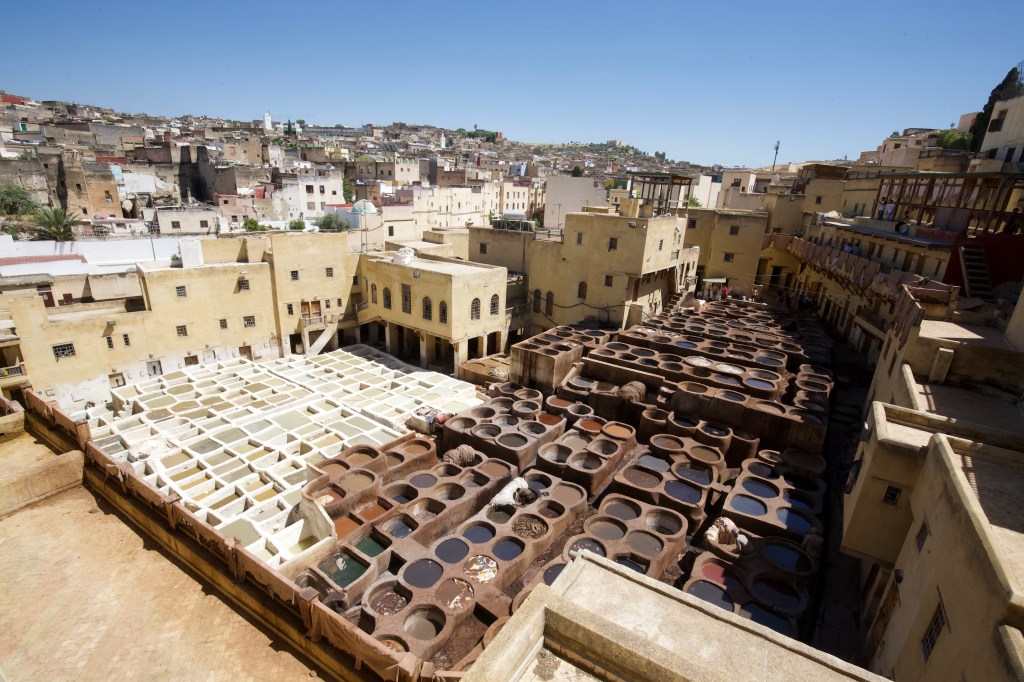
A requisite attraction of Fez was the tannery, which felt like a small village surrounding a central courtyard of hundreds dyeing pools. Streams of donkeys shipped loads of raw hides to the tannery everyday. The hides got processed and turned into colorful leather goods- bags, luggages, and clothes. They still used a natural chemical compound to cure raw hides: bird droppings. Not good for your nose, but it’s good for the environment.
Chefchaouen
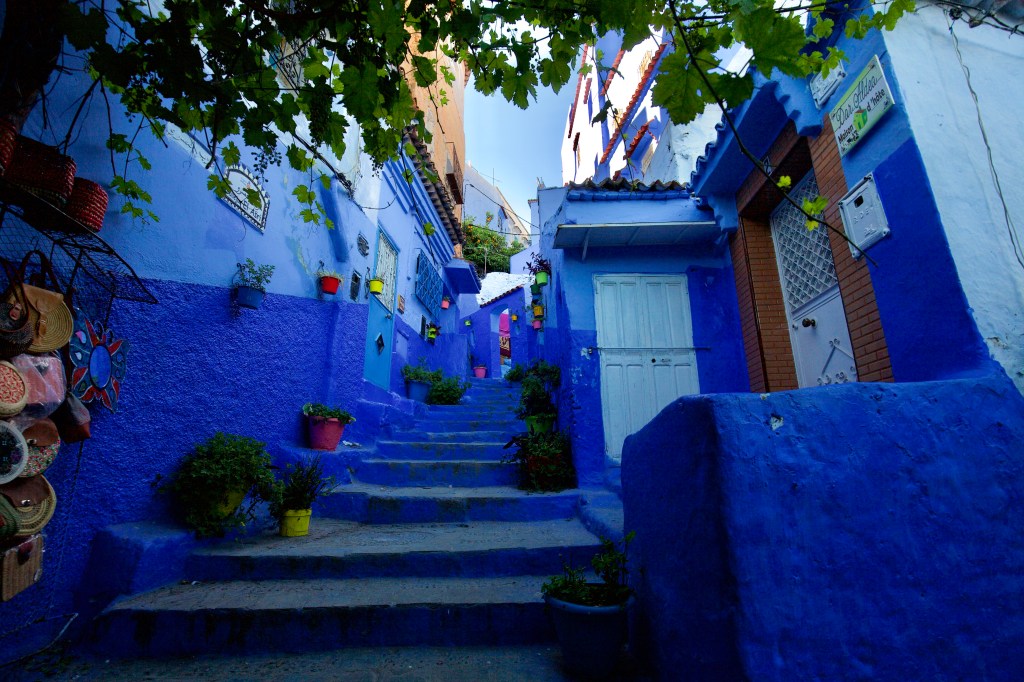
Nicknamed the“Blue City”, the city on a slope of Rif Mountain was famous for houses painted in many shades of blue. It was the most walkable city among the Moroccan cities that we visited. Most allies were not wide enough for a car. It was nestled in the mountains with steep hills hanging above and cascading creeks running by. A popular sunset vista was the Spanish Mosque on an opposite hill top overlooking the city. Sitting on the terrace of the small church converted mosque (now defunct), you can see the sun setting into distant mountains and watch the blue city changing its shade gradually from vivid blue and white to gold.
Asilah
Upon our request and with a cost, the tour operator added Asilah to the standard itinerary because we’d like to visit a beach town. That request proved to be uneducated. Rabat is also a beach town on the same Atlantic coast. That was probably the reason that Asilah was not on the tour operator’s originally recommended route.
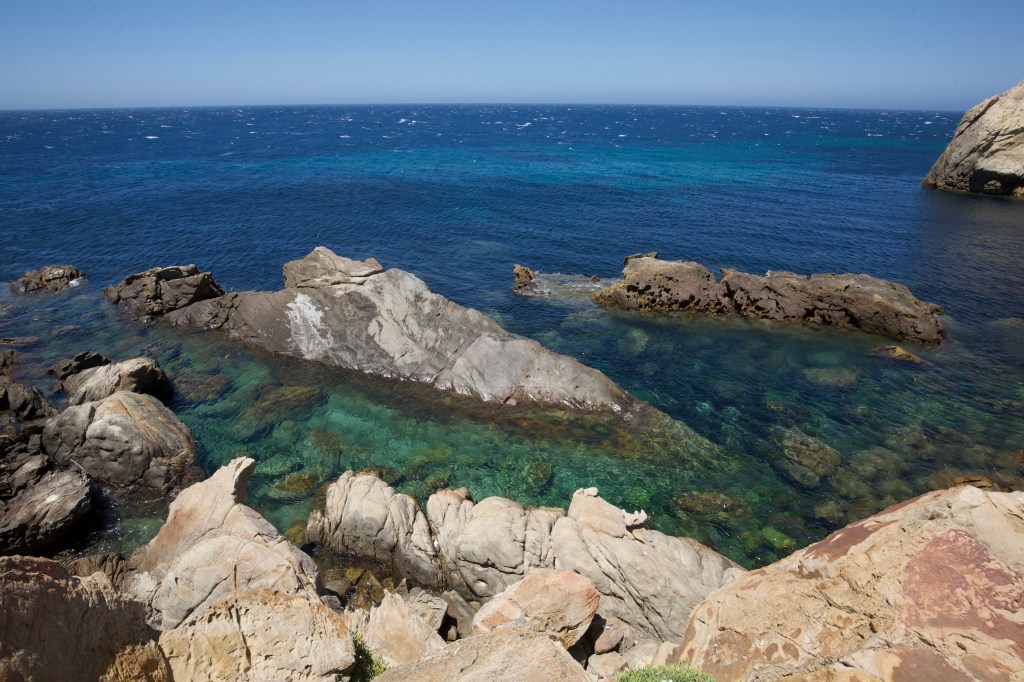
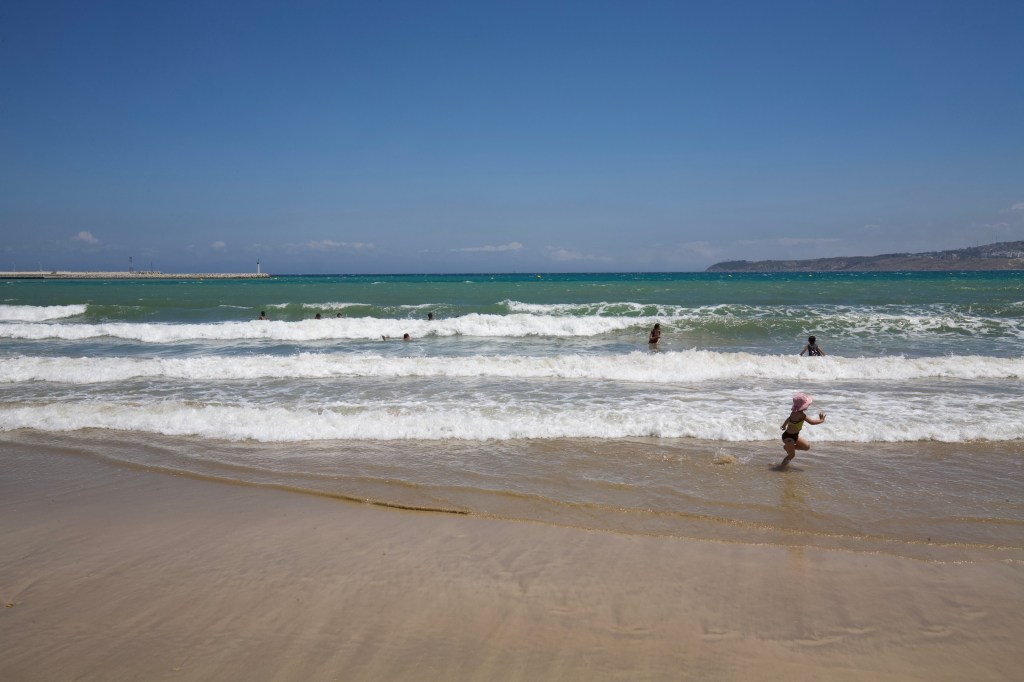
On the way from Chefchaouen to Asilah, we stopped by Tangier, a very modern city with wide beaches and big ports. We didn’t get to see Spain across the Gibraltar Strait due to the poor air quality that day. We also stopped by Cape Spartel, a beautiful vista point where the cape demarcated the Mediterranean Sea from the Atlantic Ocean. The water there has the unmistakable tint of Mediterranean: sparkling clear in a spectral of blue shades. Many people swam and fished from the big rocks that jut out into the ocean.
Asilah had a well preserved and scenic city wall that ran along the sea shore. The wall was several stories tall and had a width of a country road at the top. It connected many bastions with different sizes and shapes that protected the city. The top of the wall was a pedestrian paradise. Musicians played instruments, tourists and locals strolled and biked, people waited for and watched sunset into the ocean from the vista on the top of the wall.
Rabat
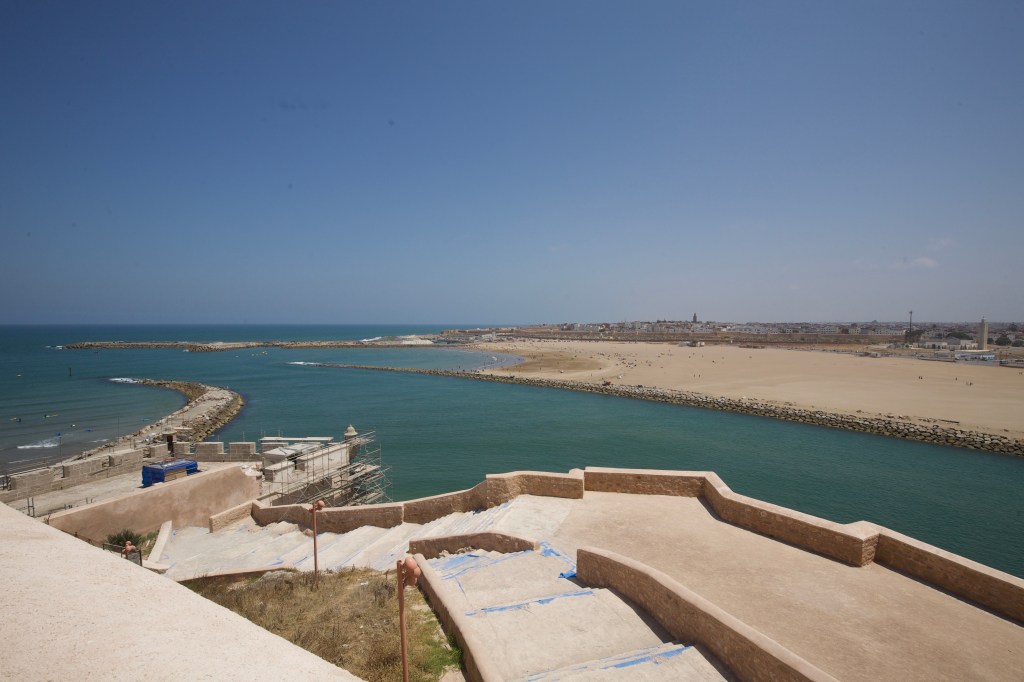
One of the capital city’s top tourist attraction is Udayas citadel, a walled city at one corner the city on a large cliff off the Atlantic Ocean. The citadel is a maze of pedestrian allies with a well marked path to the main terrace overlooking the Atlantic ocean and the mouth of river Bu Regreg. Rabat had many beaches and ocean cliffs that were quite walkable. A delicious traditional Moroccan meal at a restaurant, Dar Naji, just outside the old city wall marked a perfect end to our trip.
Morocco, Moors, and Europe
Being the closest point to Europe on the Africa continent, Morocco is a springboard to Europe from Africa. Between the 8th and 15th century, North African Berber and Arab Muslims, also known as Moors, invaded and occupied the Iberia peninsula and island of Sicily. The Muslim-ruled Iberia peninsula was called Al-Andalus. In the 15th century, Catholics regained power on the Iberia peninsula (“reconquest”, as it’s called). There is an autonomous region called Andalucia in southern Spain, reflecting its Al-Andalus past. While geography seems eternal, history is constantly being written by people. Iberia and Sicily went through Christian-Muslim-Christian cycles. People showed great resilience, and their cultures were among the most colorful.
Today, the age of military-religious conquest and reconquest is over (no?). The ancient continental battle grounds of Al-Andalus and Sicily have become tourist hot spots due to the fusion of western and eastern cultures. Let’s treasure the peace and prosperity that ensues it.
Like a Moroccan would say to greet or part ways from someone-“may peace be upon you”, Peace, my friend!


 A Passer-by 过客
Leave a reply to Anonymous Cancel reply